

Big Winner – Blissin’ Out
Finding Bliss in the Everyday
Big Winner brings a wonderfully offbeat charm to “Blissin’ Out,” a debut single that feels like a little escape from the beautiful chaos of everyday life. Blending DIY art rock with a playful, experimental spirit, the track introduces an artist who knows how to turn ordinary moments and private thoughts into something musically intriguing. There’s a refreshing sense of freedom in this approach, as if the song grew naturally from curiosity rather than any desire to follow the rules.
What makes Big Winner particularly interesting is the imagination behind the music. Working with minimal physical instruments and an inventive collection of digital sounds, the project embraces imperfections and unexpected details instead of chasing a polished, predictable sound. That creative mix gives “Blissin’ Out” its own personality, with an experimental edge that feels inviting rather than intimidating. The result is music that encourages listeners to let go, follow their curiosity, and enjoy the little surprises along the way.
Beneath the playful exterior, there’s also something quietly relatable about the world surrounding this release. Adult life can become a blur of responsibilities, repetitive routines, and memories of who we used to be. Finding moments of happiness amid all that noise is no small thing, and Big Winner brings a thoughtful perspective to that everyday struggle. There’s humor here, but also a genuine warmth that makes the project feel personal.
“Blissin’ Out” offers a promising introduction to Big Winner’s imaginative musical world. Unconventional, heartfelt, and refreshingly independent, it celebrates the joy of creating something on your own terms. Sometimes, a little experimentation is all it takes to rediscover the fun in making music.

Shortout Kid – Lamb
Lamb: A Beautifully Chaotic Rock Experience
Shortout Kid’s “Lamb” is the kind of track that grabs your attention with its raw energy and refuses to play by the rules. Blending gritty rock textures with electronic experimentation, this intriguing release feels wild, edgy, and wonderfully unpredictable. It has a rebellious spirit that makes every shift in sound feel like part of a thrilling musical adventure.
What makes the track stand out is its striking contrast between aggression and atmosphere. Distorted sounds bring a fierce, almost mechanical intensity, while the choral elements add an unexpected sense of depth and drama. Rather than sticking to a familiar rock formula, Shortout Kid pushes into more adventurous territory, allowing noise, rhythm, and melody to collide in fascinating ways. The result is a sound that feels both abrasive and strangely hypnotic.
The chorus is a particularly compelling moment, offering a memorable burst of energy amid the track’s rougher edges. There is a boldness in the way everything comes together, creating an experience that feels carefully crafted without losing its untamed character. The electronic touches add another dimension, giving the music a restless pulse that keeps the listener engaged.
“Lamb” also leaves a strong impression because it embraces experimentation instead of chasing easy appeal. Its unusual sonic combinations give it a distinctive personality, making it an exciting listen for anyone who enjoys music that challenges expectations. With this single, Shortout Kid delivers a fascinating blend of noise, emotion, and alternative rock attitude. It is daring, intense, and refreshingly unconventional, leaving plenty of curiosity about what the upcoming debut album might bring.
Manufracture Music – System Apathy
Machines Without Meaning
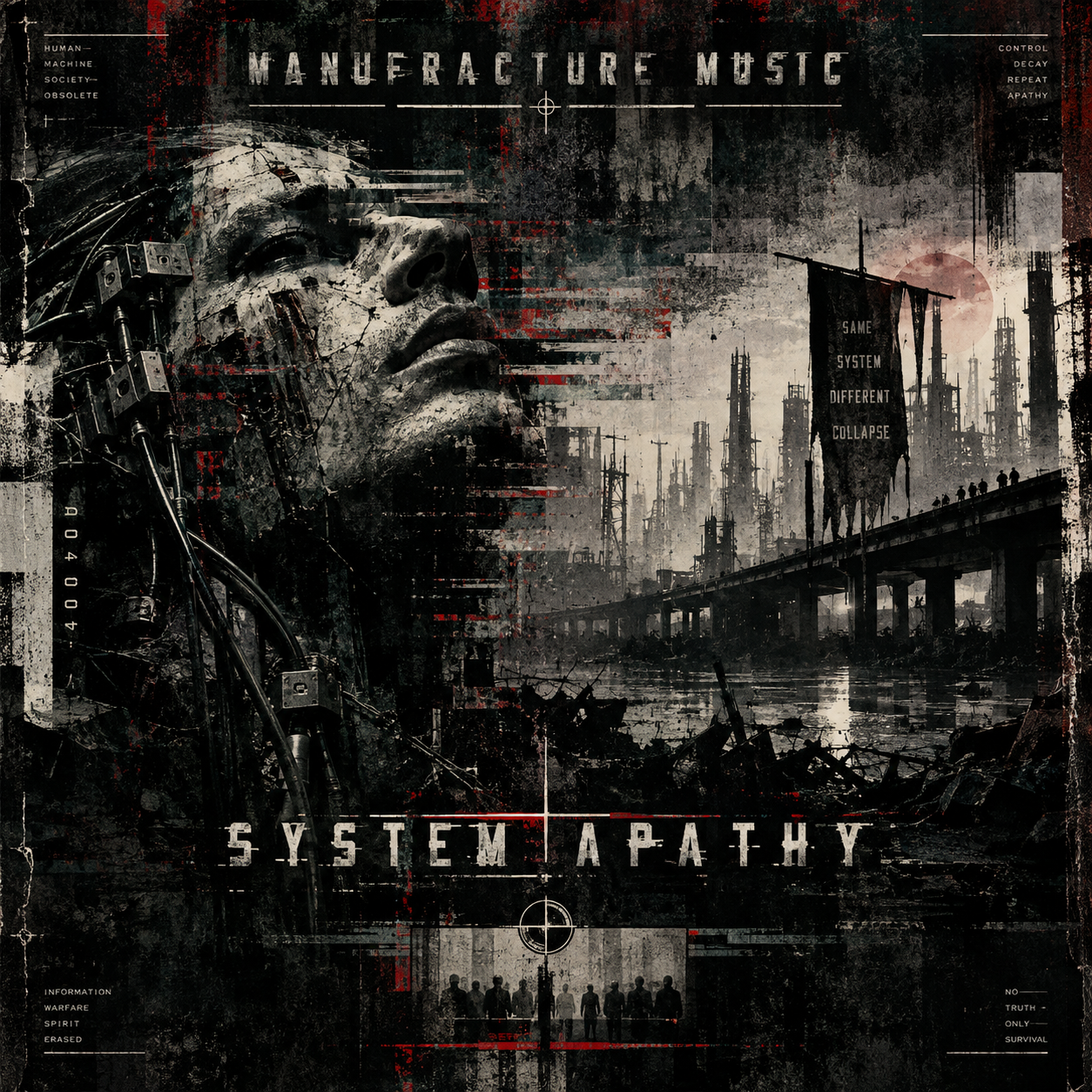
Manufracture Music’s “System Apathy” is the kind of industrial track that doesn’t simply create a dark atmosphere—it pulls you straight into one. Built around distorted electronic pulses, heavy mechanical rhythms and cold, cinematic textures, the track feels like the soundtrack to a civilization quietly coming undone. It is bleak, unsettling and strangely hypnotic.
Valerian Steel’s hardware-first approach gives the production a physical presence. The analog synthesizers and drum machines don’t sound polished into lifeless perfection; instead, their grit, tension and imperfections become part of the experience. Every pulse seems to carry a sense of machinery working overtime, even as the world around it begins to lose its purpose. That contrast gives the track plenty of character.
What makes “System Apathy” especially compelling is the thought behind its dystopian mood. This isn’t darkness for darkness’s sake. The song explores technological collapse, social indifference and the uncomfortable possibility of systems continuing to function even when the people inside them have stopped caring. It leaves a lingering feeling of unease without sacrificing its musical drive.
The concept becomes even more intriguing through the deliberate clash between analog hardware and AI-generated visuals. Rather than hiding that contradiction, Manufracture Music puts it at the centre of the artistic identity, raising questions about technology, authenticity and creativity.
Cold, forceful and wonderfully atmospheric, “System Apathy” proves that electronic music can make you move while simultaneously making you think. It is a compelling piece of dystopian industrial music with plenty to say beneath its mechanical surface.

L0VE. – There Will Be Signs
A Beautiful Tension Between Fragility and Power
L0VE. makes a compelling first impression with “There Will Be Signs,” a debut single that captures the uneasy feeling of standing on the edge of change. Blending alternative rock with post-rock influences, the track takes its time building an atmosphere, drawing listeners into an emotional landscape where uncertainty and anticipation go hand in hand.
What makes this release especially engaging is the way its musical intensity grows alongside its emotional weight. The quieter opening creates a sense of intimacy, allowing vulnerability to take center stage before heavier guitars gradually enter the picture. As the arrangement expands, the music develops a powerful, almost overwhelming quality without losing the sensitivity that makes it so captivating. Rather than relying on volume alone, the song uses its shifts in energy to create a genuine emotional journey.
There is something deeply relatable about the mood at the heart of this track. Life often brings moments when we sense that something is about to change, even when we cannot explain what we feel. L0VE. translates that uncertainty into sound, balancing melancholy with a growing sense of possibility. The contrast between delicate passages and surging rock sections keeps the experience absorbing, giving the music room to breathe before pulling listeners back into its intensity.
For a debut, “There Will Be Signs” feels confident in its emotional direction. L0VE. shows a clear interest in atmosphere, dynamics, and honest expression, creating a sound that feels both vulnerable and expansive. This is a promising introduction from a band that understands how powerful music can be when it allows feelings to unfold naturally. It leaves a lasting impression and builds genuine curiosity about what L0VE. will explore next.

Johnny Priest – Song for the Sun
A Little Sunshine, A World of Wonder
Johnny Priest brings a refreshing burst of warmth with “Song for the Sun,” a thoughtful, uplifting track that celebrates life beyond everyday worries. Its central idea is beautifully grounding: the sun has watched countless generations come and go, reminding us that our troubles are only a small part of a much bigger picture. Rather than feeling overly philosophical, the song turns that perspective into an invitation to appreciate the good moments and find joy in sharing them with others.
The music has a lovely global flavour, with guitar rhythms inspired by Mexican huapango traditions giving the track a lively, sun-soaked character. The guitars bring movement and colour, creating a sound that feels organic, inviting, and full of life. Horn arrangements add another layer of richness, lending the composition a celebratory spirit without taking away from its reflective heart. The addition of Urdu percussion makes the musical blend even more intriguing, weaving different cultural influences into a cohesive, feel-good experience.
What makes this release especially appealing is its balance of optimism and thoughtfulness. Johnny Priest doesn’t simply celebrate sunshine as a symbol of happiness; the song also encourages a deeper appreciation of our shared place in the world. Its warm melodies and cross-cultural textures create a sense of togetherness that feels genuine rather than forced.
“Song for the Sun” is the kind of track that can brighten an ordinary day while gently shifting your perspective. With its vibrant instrumentation, worldly character, and generous spirit, Johnny Priest delivers a musical reminder to pause, connect, and celebrate the light we all share.

Lelinski – Me and my mind
A Feel-Good Rush of Energy
Rian Hart makes a promising entrance with “GOOD TIMES,” a debut single that brings a refreshing spark to alternative dance-pop. The track carries the kind of energy that makes ordinary moments feel a little more exciting, inviting listeners to loosen up and enjoy the ride. With electronic sounds meeting heartfelt pop sensibilities, Hart finds a lively balance between movement and emotion.
What makes this release appealing is its potential to connect with different moods. The dance-inspired direction brings a sense of momentum, while the melodic approach gives the music a warmer, more personal touch. Rather than relying on energy alone, Hart’s artistic vision leaves room for feeling, creating a sound that can suit both a drive with the windows down and a packed room full of people ready to move. That blend of intimacy and excitement gives the song its identity.
Hart’s background as a drummer also adds an interesting dimension to his move into the spotlight. Stepping away from his role behind the kit to build a solo career marks a bold new chapter, and “GOOD TIMES” serves as an introduction to the artist he wants to become. His influences may span dance music, indie pop, and alternative sounds, yet this debut signals a desire to bring those worlds together in his own way.
There is an appealing sense of possibility surrounding this first release. “GOOD TIMES” sets the stage for an artist exploring the meeting point of catchy melodies, electronic textures, and genuine emotion. If this debut is a taste of what lies ahead, Rian Hart has plenty of room to grow and give listeners more reasons to stay tuned.