
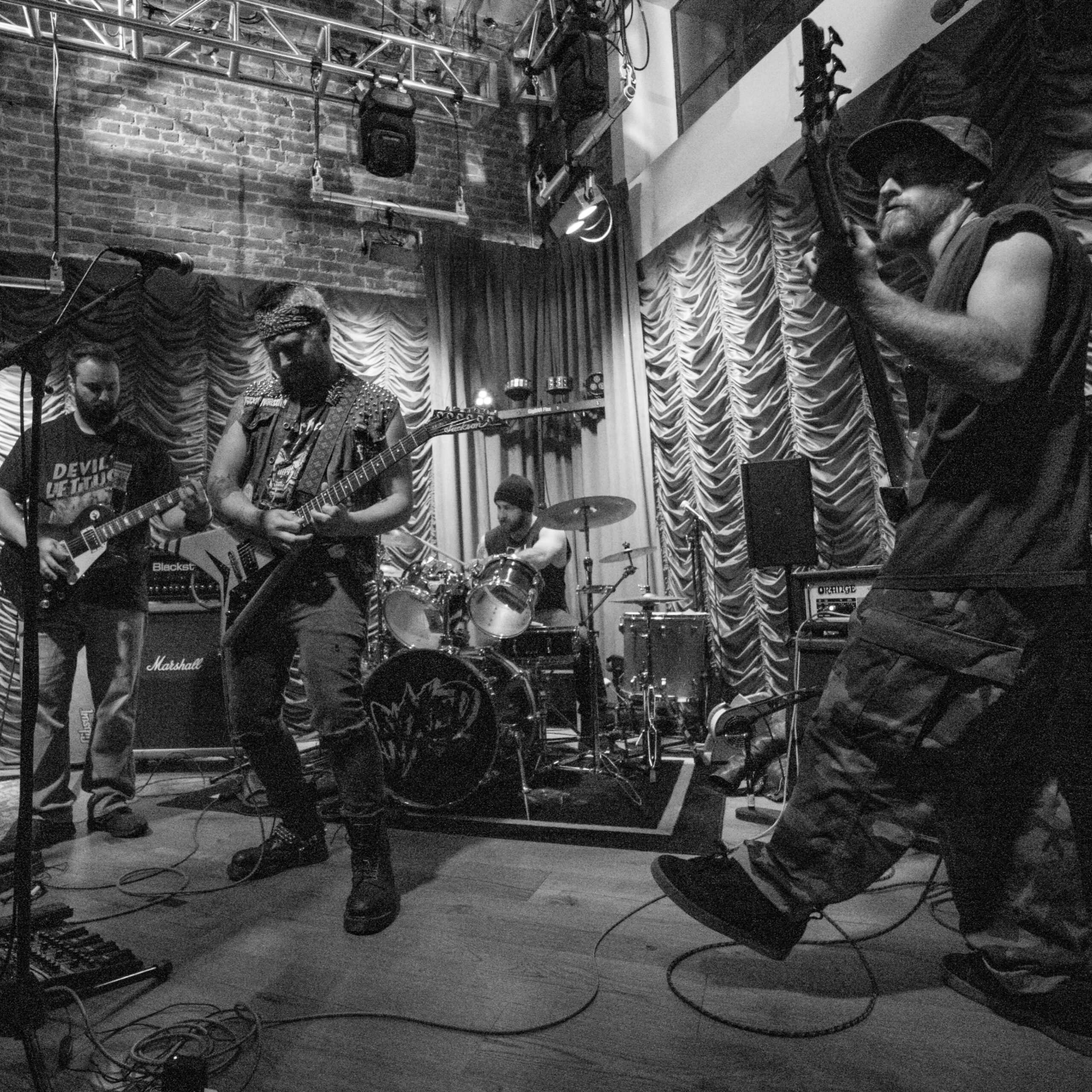
Some albums feel carefully planned. Others feel like they were kicked into existence with muddy boots and a blown speaker. Speak for the Dead, the self-titled debut from Santa Rosa’s Speak for the Dead, belongs firmly to the second kind. This is a record that doesn’t wait for permission. It arrives loud, rough around the edges, and proudly unapologetic—an album that smells like sweat, spilled beer, and burned-out amplifiers.
From the first few minutes, it’s clear this band understands the power of raw energy. Formed by Jordie Hilley and Clay Prieto—both seasoned players with deep roots in California’s punk scene—and powered by Eric Lundgren’s ferocious vocals and Nick Parker’s sharp-edged guitar work, Speak for the Dead sound like a band that knows exactly who they are. Their influences are worn openly: the aggression of Discharge, the speed and grimness of Inepsy, the weight of Power Trip, and the timeless swagger of Motörhead. But instead of sounding like a tribute act, they fuse these elements into something urgent and alive.
One of the album’s most striking moments comes with Rearview Riot, a track that hits like a runaway vehicle with no intention of slowing down. Built on hardcore punk fury, it carries a sense of movement—of burning bridges and never looking back. The guitars grind relentlessly while the rhythm section drives forward with bruising force. The vocals here are especially powerful, sounding less like singing and more like a warning shouted through clenched teeth.
That intensity deepens on Eternal Night, a song that leans into darker territory. There’s a suffocating atmosphere to it, a feeling of being trapped under flickering streetlights at 3 a.m. The band’s hardcore roots are fully on display, but there’s also a heaviness that borders on metal. It’s relentless, bleak, and strangely addictive, the kind of track that stays with you long after it ends.
Where the album really shows its range, though, is when it steps slightly outside strict punk rules. Lights Out is a standout in this regard. It still hits hard, but there’s a rock ’n’ roll swing beneath the chaos, a sense of groove that invites fists in the air rather than just heads in the pit. The song feels like a late-night anthem for dive bars and back-alley shows, proving the band knows how to balance aggression with hooks.
The heart of the album may well be the title track, Speak for the Dead. This is where everything comes together—punk urgency, metal muscle, and street-level rock swagger. There’s a unifying energy here, a sense of collective voice, as if the band is shouting on behalf of everyone who’s ever felt ignored or written off. It’s bold without being preachy, loud without losing purpose.
What makes Speak for the Dead work so well is its honesty. This album doesn’t chase trends or polish away its roughness. Instead, it leans into it. Every track feels lived-in, powered by friendship, shared history, and a genuine love for loud music played with conviction.